
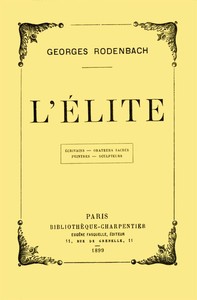
L'élite: écrivains, orateurs sacrés, peintres, sculpteurs by Georges Rodenbach
Georges Rodenbach's L'élite: écrivains, orateurs sacrés, peintres, sculpteurs is a collection of essays that feels more like a series of intimate, shadowy portraits than a dry historical text. Rodenbach, best known for his novel Bruges-la-Morte, turns his sensitive eye to the artists and thinkers of his time and place.
The Story
There isn't a single plot. Think of it as walking through a quiet gallery late at night, stopping before each subject. Rodenbach introduces us to a range of creative figures—writers, painters, clergy with a gift for oration, sculptors. He isn't just listing their achievements. He's trying to capture their inner world. He writes about their struggles with inspiration, their relationship to the somber, often misty Belgian landscape, and the peculiar loneliness that can come with a deep artistic or spiritual life. The 'story' is the collective mood of these individuals: a blend of intense beauty, quiet despair, and a search for meaning that feels very real.
Why You Should Read It
This book surprised me. I expected a stuffy critique, but it's deeply personal. Rodenbach writes with the empathy of someone who knows the creative struggle firsthand. When he describes a painter obsessed with the play of grey light on water, or a writer paralyzed by the weight of an idea, it feels immediate. The themes are timeless: the clash between inner vision and outer reality, the search for the sacred in art, and how our environment shapes our soul. It’s less about 'great art' and more about the human cost and quiet joy of making it. You get a powerful sense of place—how the canals, fog, and Gothic architecture of Belgium seeped into these artists' work.
Final Verdict
This is a niche but gorgeous read. It's perfect for lovers of moody, atmospheric literature (think Poe or the quieter moments of Victor Hugo) and anyone interested in the Symbolist movement. It's also for readers who enjoy biographies but want something more poetic and impressionistic. A word of caution: it's not a fast-paced page-turner. It's a book to sip slowly, like a strong coffee on a grey afternoon. If you're in the right frame of mind—contemplative, a little wistful—it’s a truly transporting experience that connects you to the artistic heartbeat of a bygone era.
The copyright for this book has expired, making it public property. You can copy, modify, and distribute it freely.
William Garcia
6 months agoA sophisticated analysis that fills a gap in the literature.
George Garcia
1 year agoGiven the current trends in this field, the wealth of information provided exceeds the average market standard. Highly recommended for those seeking credible information.
Matthew Brown
9 months agoFrom a researcher's perspective, the bibliography and references suggest a high level of research and authority. Thanks for making such a high-quality version available.
Emily White
7 months agoInitially, I was looking for a specific answer, but the cross-referencing of different chapters makes it a great study tool. I feel much more confident in my knowledge after finishing this.
Nancy White
2 months agoA must-have for graduate-level students in this discipline.