About 167 minutes
Letters to Dead Authors — Text and Context
Historical Psychological Social Fiction
38,343 recorded words. 25 minutes difference from this book's estimate.
View Gutenberg source #1491
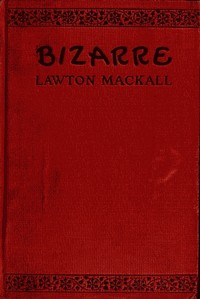
This digital edition of Bizarre — Reading Notes is described by source-level measurements including 32,473 words, 2 hr 22 min estimated reading time, and 5 detected text sections.
The text analysis averages about 16.5 words per sentence, while the detected sections provide another way to judge how the source is divided.
Project Gutenberg metadata also associates the work with “American wit and humor,” connecting these edition facts with the source record’s subject description.
Explore this collection
These alternatives are selected using recorded categories and estimated reading time.
About 167 minutes
Historical Psychological Social Fiction
38,343 recorded words. 25 minutes difference from this book's estimate.
View Gutenberg source #1491About 173 minutes
Historical Psychological Social Fiction
39,632 recorded words. 31 minutes difference from this book's estimate.
View Gutenberg source #40206About 188 minutes
Historical Psychological Social Fiction
43,181 recorded words. 46 minutes difference from this book's estimate.
View Gutenberg source #67775Search stored excerpts and compare books → Choose by your preferences →
Choices use stored catalog measurements. Estimates vary with reading speed. A shared category is a catalog label, not a claim that two books have the same argument or literary quality.
Search reads excerpt text stored with this catalog and links to its associated Gutenberg record. The connection is stored in the site database; this tool does not recheck that every excerpt is word-for-word identical to that external record. Excerpt search does not cover every chapter and does not verify historical publication dates.
Catalog snapshot checked: 2026-09-25. Coverage: 93 public books, 92 available source excerpts.
Read the complete public-domain text at its original source.
Read on Project GutenbergLawton Mackall's Bizarre, published in 1922, is a collection of short essays and sketches that originally appeared in periodicals such as Life, Judge, and The New York Times. The title signals the author's penchant for the odd and the everyday absurd, but the catalog subjects—American wit and humor, and American essays—only partially capture the work's range. The excerpts reveal a writer who blends self-deprecating anecdote with social commentary, often targeting domestic inconveniences, fashion follies, and the pretensions of modern life. Mackall's voice is conversational and ironic, as when he describes his hybrid automobile, Plury, as a 'cosmopolitan' whose parts from rival nations 'kept the gear box in a constant state of friction.'
Several essays in Bizarre turn on the frustrations of household objects and personal adornments. In 'Unsolicited Personal Adornments,' Mackall recounts the horror of discovering a spot on one's coat after a round of calls, imagining the judgments of relatives and acquaintances. The humor lies in the escalation of social anxiety over a trivial blemish. Similarly, 'The Care of the Husband' and 'The Art of Packing' likely extend this theme of domestic struggle, though the excerpts do not include their full texts.
A more elaborate example is 'My Museum,' where Mackall describes his second-hand car, Plury (short for E. Pluribus Unum), assembled from mismatched parts. He writes that 'individually Fords, Buicks, Overlands... were too expensive for me; but collectively... I could afford them all.' The vehicle's international components—Italian rear axle, French steering wheel, Austrian magneto—become a metaphor for mechanical and political discord, as 'a German cogwheel that clutched with an English one... kept the gear box in a constant state of friction.' This essay exemplifies Mackall's ability to find comedy in mechanical failure while subtly critiquing nationalism and consumer culture.
In 'All, All Are Gone, The Old Familiar Façades,' Mackall turns his eye to the built environment, observing how buildings in the city are 'disguising their age' through renovations. He notes that Victorian brownstone mansions 'now renew their youth as the "Rubens Studios" or "Haddon Chambers,"' while drab office buildings 'take on new complexions as talcumy white as those of the flappers passing by.' The essay personifies architecture, describing 'beauty doctoring' that eliminates 'dark lines under tired window sills' and lifts 'sagging balconies.'
Mackall's tone is wryly critical of this commercial transformation. He remarks that formerly sedate houses now 'shamelessly come forward as close to the line as they dare, meeting the idle stroller half-way... with broad plate-glass assurance.' The essay concludes with a punchline about real estate values, undercutting nostalgia with economic reality: 'Would it be as dear? Oh, much dearer!—as the real estate agent will tell you.' This piece showcases Mackall's skill at blending social observation with humor, though the catalog subject 'American wit and humor' underplays its commentary on urban development and consumerism.
The preface of Bizarre establishes a playful, self-deprecating persona that carries through the essays. Mackall thanks his dentist, tailor, stationer, and grocers for their 'stimulus,' noting that they 'neither "corrected the proofs" of my book nor "saw it through the press," nor allowed me access to rare documents.' This mock-acknowledgment parodies the conventions of authorial gratitude, suggesting that the book's inspiration came from mundane commercial transactions rather than scholarly research.
This ironic stance is consistent with the essays' focus on everyday life. The author presents himself as a flâneur and amateur observer, prone to mishaps—like losing his slippers in a goldfish bowl while visiting the Cholmondeley-Browdens. Yet the excerpts also reveal a writer attentive to detail and social nuance. The catalog subjects do not fully capture this blend of humor and social critique; the work is as much about the absurdities of modern American life as it is about wit for its own sake.
Readers approaching Bizarre should expect a series of loosely connected sketches rather than a unified narrative. The essays reward attention to Mackall's precise language and his ability to find humor in the mundane—from a malfunctioning car to a stained coat. The illustrations by Lauren Stout, though not excerpted here, likely complement the text's whimsical tone. This collection offers a window into early twentieth-century American humor and the everyday concerns of its author, without the grand claims of literary importance that later anthologies might impose.
Flipping through Bizarre, I paused at Mackall’s gentle mockery of our restless striving—the way we dress up our little routines. It reminded me, unexpectedly, of older questions about what lies beneath all that surface noise. The Buried Temple — Background and Themes has that same quiet patience, unearthing foundations rather than decorations. I found myself lingering there longer than I’d planned, just thinking.
Your answers remain private and are stored only in this browser.









