
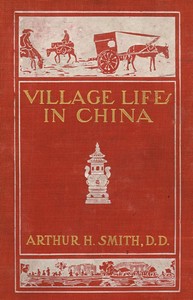
Village Life in China: A Study in Sociology by Arthur H. Smith
Published in 1899, Village Life in China isn't a novel with a plot. Think of it as an incredibly detailed field report from a vanished world. Arthur Smith, an American missionary, lived in rural Shandong province for decades. His book is a systematic walk through every aspect of village existence. He starts with the physical space—the layout of a village, its walls, gates, and temples. Then he moves inward, to the family unit, explaining complex kinship ties and the absolute authority of elders. From there, he explores the economy of the village market, the tense relationship between farmers and landlords, and the intricate, often exhausting, social rituals that governed everything from weddings to funerals.
Why You Should Read It
This book is special because Smith writes as a permanent resident, not a tourist. He gets the small stuff that defines a culture. He explains why a village would collectively pay for a theatrical performance (it wasn't just for fun—it was a spiritual necessity to appease the gods). He describes the agonizingly slow process of dispute resolution, where saving 'face' was more important than swift justice. His observations are a mix of admiration for the villagers' resilience and frustration with systems he saw as oppressive or superstitious. You feel the weight of tradition and the constant struggle against poverty, famine, and official corruption. It's anthropology before the term was cool, filled with real, observed people, not just abstract ideas.
Final Verdict
This is a perfect read for history and sociology fans who want to get their hands dirty in the details of everyday life. It's also great for anyone curious about China's social foundations, as so much of what Smith documented echoes in modern Chinese family and community dynamics. Be warned: it's not a breezy page-turner. It's a slow, thoughtful, and sometimes repetitive study. But if you let yourself sink into its rhythm, you'll be rewarded with one of the most clear-eyed portraits of 19th-century life anywhere in the world. You won't find dragons or warriors here—just the profound, complicated story of how ordinary people built a society, one village at a time.
There are no legal restrictions on this material. Use this text in your own projects freely.
Karen Miller
2 months agoMy first impression was quite positive because the step-by-step breakdown of the methodology is extremely helpful for students. Truly a masterpiece of digital educational material.
Michael Wilson
9 months agoBefore I started my latest project, I read this and the step-by-step breakdown of the methodology is extremely helpful for students. It’s hard to find this much value in a single source these days.
Patricia Martinez
3 months agoClear, concise, and incredibly informative.
Edward Taylor
7 months agoWow.









Emily Wilson
8 months agoMy first impression was quite positive because the step-by-step breakdown of the methodology is extremely helpful for students. This exceeded my expectations in almost every way.